
HARMONIA MORAVIAE 2025
Next spring marks 80 years since the public in Zlín first heard the sound of their newly founded philharmonic orchestra when, on 30th April 1946, the Velké Kino theatre hosted the orchestra’s first performance. The orchestra has since gone on to become a cornerstone of cultural life not only in “the capital of shoe-making" as Zlín was sometimes known, but also in the wider region.
The ensuing eight decades have seen several generations of top-notch musicians passing through the Orchestra’s ranks, linking their professional careers but also their personal lives with the orchestra, and it is they who have shaped the face of the Philharmonic as it is today, together with its musical persona. Equally important in this respect are the chief conductors who have set the orchestra’s direction, shaping its artistic development and taking it onwards and upwards to the next artistic level.
We are therefore delighted to welcome a whole host of top-class soloists and musicians from this country and abroad to Zlín for the 23rd season of our Harmonia Moraviae International Music Festival and our entire 2025-26 anniversary concert season. Centre-stage in this celebration are, of course, all 88 members of the Bohuslav Martinů Philharmonic who are launching this festival to mark 80 years of “their” orchestra. They are the festival’s key figures not only on the grand stage in full symphonic formation, but also in chamber groups, where their unique musical personalities and carefully coordinated performance stand out even more.
The programming of the individual concerts, certainly not the easiest in terms of performance, will present new challenges, but this anniversary season is a great opportunity for the Orchestra to showcase its strength and expertise. No surprise, then, that the whole festival season takes place under the watchword “Full on!”, “Live!”, “Here’s to You!” with the Orchestra “full on” in terms of its commitment, its concerts performed “live” and in direct contact with the audiences, and with a hearty toast to celebrate its big anniversary!
Download the 2025 Harmonia Moraviae Guide
WELCOME TO SEASON 80!
Thu, 18. 9. 2025, 19.00 hrs, Zlín Congress Centre
FBM’s 80TH SEASON OPENING CONCERT
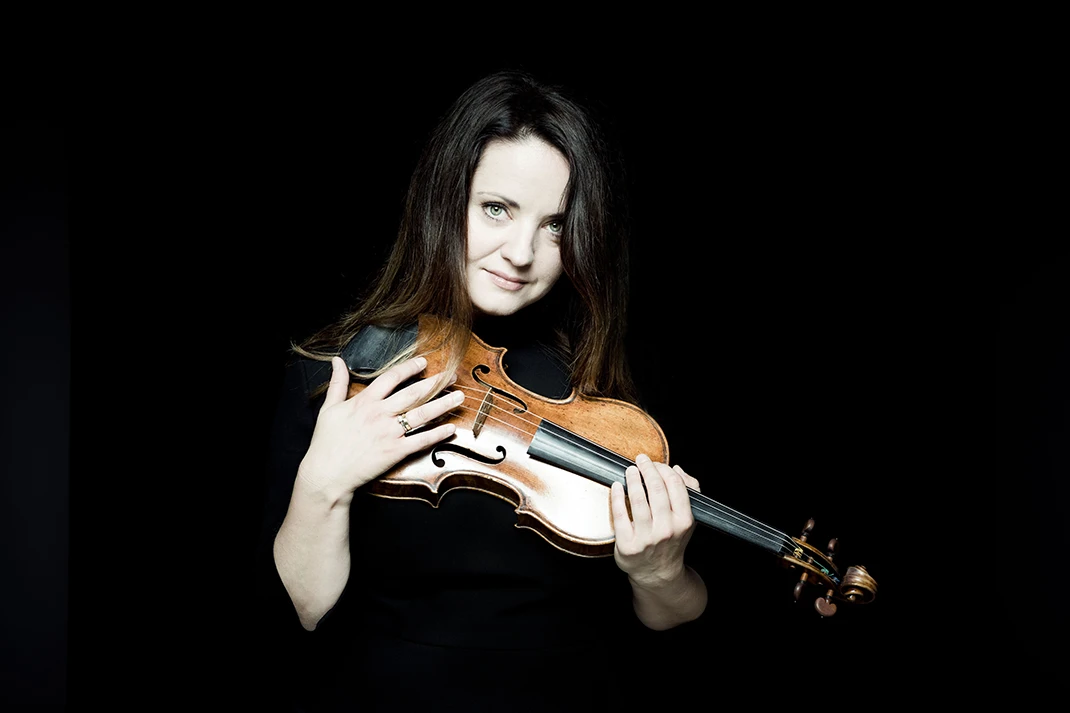
BAIBA SKRIDE violin
ROBERT KRUŽÍK conductor
OLOMOUC MILITARY BAND
BOHUSLAV MARTINŮ PHILHARMONIC ORCHESTRA
Bohuslav Martinů
Thunderbolt P-47, H.309
Dmitry Shostakovich
ViolinConcerto no. 2 in C sharp minor, Op. 129
Leoš Janacek
Sinfonietta
The Bohuslav Martinů Philharmonic’s 80th season is here, and what better opening gambit than a piece by the composer after whom the Orchestra has been named since 1989, and moreover completed exactly 80 years ago, in mid-September 1945.
Bohuslav Martinů’sThunderbolt P-47 is a lively orchestral scherzo commissioned by the then director of the American National Symphony Orchestra, Johannes Kindler. He was inspired by the eponymous legendary American fighter plane which roamed the European skies during the Second World War. This fresh dynamic composition reflects not only Martinů's admiration for this remarkable flying machine, but also the atmosphere of expectation and hope of that time.
The stage then lights up when this evening’s soloist Baiba Skride, the acclaimed Latvian violinist noted for her virtuoso technique and deeply musical interpretation, and winner of the prestigious Queen Elizabeth competition, joins the Orchestra and its chief conductor Robert Kružík in a performance of Dmitry Shostakovich’s second violin concerto, his gift to the violin virtuoso David Oistrakh for the latter’s 60th birthday. In his eagerness, however, Shostakovich evidently miscalculated slightly as he formally presented the work to Oistrakh a year early in 1967. The composer redeemed himself for this mistake, though well-intentioned, by writing another piece for Oistrakh, his only violin sonata, the following year.
Shostakovich’s concerto was inspired by the unique qualities of Oistrakh's playing, his extraordinary sense of warmth, sensitivity and technical bravura. The result is a work with long vocal passages in which the violin really "sings", and at the same time providing dramatic contrasts that serve to underscore the depth and emotion of the work.
The concert concludes with Leoš Janáček’s Sinfonietta written in 1926 and subsequently dedicated to the Czechoslovak armed forces. Janáček's original idea intended the work for a large symphony orchestra supplemented by a brass section of military musicians, and we hear it in this authentic form tonight as the Orchestra joins forces with the Olomouc Military Band in a climax as exciting as our entire 80th season, which formally opens with this concert.
BEETHOVEN BRAHMS THE TRIO
Thu, 25. 9. 2025, 19.00 hrs, Zlín Congress Centre

The Trio:
JIŘÍ VODIČKA violin
VÁCLAV PETR cello
MARTIN KASÍK piano
LEOŠ SVÁROVSKÝ conductor
BOHUSLAV MARTINŮ PHILHARMONIC ORCHESTRA
Ludwig van Beethoven
Triple Concerto in C major for violin, cello and piano, Op. 56
Johannes Brahms
Symphony No. 2 in D major, Op. 73
"This is really something new," Beethoven declared confidently in the spring of 1804 in a letter to his publisher about his new concertante composition for three solo instruments with symphony orchestra accompaniment. This was to some extent a mistaken assertion, since there were already earlier examples of a similar concept in the form of the concerto grosso or the sinfonia concertante. Nonetheless Beethoven managed to create a work which, even 220 years later, still captivates listeners with its thematic inventiveness, exceptional bravura, great eloquence and sheer majesty. The Trio is a chamber ensemble of three top musicians - violin virtuoso Jan Vodička, Prague Spring Festival cello winner Václav Petr, and the brilliant pianist Martin Kasík - also a Prague Spring Competition winner.
Brahms' Symphony No.2 in D major was written during the composer’s stay in 1877 in the picturesque Carinthian village of Pörtschach on Lake Wörthersee. While his first symphony was a work some 21 laborious years in the making, the second symphony was fired off in a matter of months, the composition flowing freely from his pen Despite the insistence of his friends, Brahms was careful to keep the overall mood of the upcoming work a secret, confusing the public with deliberately misleading comments and claiming that the work would be dark, sorrowful and even tragic. He even stated that he should wear a black armband to sufficiently convey its mournful character. Brahms was evidently a great humorist, but the result was quite the opposite, and the audience at its premiere in Vienna were astonished - shocked even, to hear the work’s joyful exuberance instead of the tragic piece they were led to expect. Brahms found this prank at the expense of the surprised Viennese public greatly amusing and was undoubtedly delighted. His Second Symphony is sometimes described as his 'Pastoral' and from the very first bars it exudes extraordinary freshness, charm and tenderness.
VONDRÁČEK PLAYS CHOPIN
Thu, 2. 10. 2025, 19.00 hrs, Zlín Congress Centre

LUKÁŠ VONDRÁČEK piano
ROBERT KRUŽÍK conductor
BOHUSLAV MARTINŮ PHILHARMONIC ORCHESTRA
Arthur Honegger
Rugby. Symphonic movement no. 2. H 67
Frederic Chopin
Concerto no. 2 in F minor for piano and orchestra, Op.21
Igor Stravinsky
Petrushka. Ballet suite, 1947 version
Lukáš Vondráček, the outstanding pianist and laureate of the prestigious Queen Elizabeth competition, has once again accepted the Orchestra’s invitation to play Chopin’s F-minor piano concerto under its chief conductor Robert Kružík - a sparkling and unique jewel in the piano concerto repertoire overflowing with its lively melodics and rich ornamentation, imaginative harmonics and consummately sophisticated piano styling.
It was almost a century after Chopin wrote his concerto that Arthur Honegger, a keen sportsman, took his composing art to a much different playing field - the world of rugby, with its title clearly indicating Honegger’s fascination for that game and particularly its dynamic movement at first sight chaotic, but in fact perfectly organised. This 1928 single-movement work masterfully captures the thrilling course of a rugby match, with all its energy, aggression and sophisticated movement.
"You can be proud of what you have accomplished with this work,” said the composer and visionary Claude Debussy in July 1911 after the Paris premiere of Igor Stravinsky's ballet Petrushka. “I am convinced that you will go much further in the future." In this opinion Debussy was by no means alone, as the work captivated many with its colour, rich instrumentation and superb music inspired by Russian folklore. Our concert concludes with the orchestral suite from this ballet in which Stravinsky successfully incorporates elements of folk music into the form of stage dance, using inventive means of expression to capture the typical atmosphere of Russia in an extraordinary way.
INSPIRED BY INSPIRATION
Tue, 7. 10. 2025, 19.00 hrs, Zlín Congress Centre

Elévé Quintet
TOMÁŠ BAČOVSKÝ violin VERONIKA DOSTÁLOVÁ viola
ROBERT KRUŽÍK cello KAREL PEVNÝ double bass VERONIKA MITÁŠOVÁ piano
Adam Skoumal
Variations on a Gypsy Melody for violin and piano
Johan Halvorsen
Sarabande with variations on Handel's theme for violin and viola
Camille Saint-Saëns
The Swan from Carnival of the Animals
Camille Saint-Saëns
The Elephant from Carnival of the Animals
Franz Schubert
Piano Quintet in A Major, Op. 114 "Trout"
The 80th anniversary of the founding of the Bohuslav Martinů Philharmonic offers the opportunity to show that its members are not only excellent orchestral musicians, but also proficient performers in the field of chamber music, which also applies to their chief conductor who, on this occasion, lays down his baton and takes up the bow.
Our programme tonight explores diverse sources of musical inspiration which may have served to guide composers in their work. Whether they drew from folk art and its specific features, from the legacy of their predecessors, or from natural settings, every note reflects the origin of their creative drive, and it is folklore themes that are brought to life in the form of Adam Skoumal’s variations on the gypsy ballad Nane cocha, nane gad – a lively work for violin and piano which, incidentally, was chosen as a compulsory piece for the International Violin Competition in Buenos Aires. The art of the old Baroque masters is then recalled in the Norwegian composer Johan Halvorsen’s Sarabande with Variations for violin and viola based on the original theme of George Frideric Handel's harpsichord suite in D minor. It is then to the world of nature that Camille Saint-Saëns turnsfor the first of tonight’s two iconic images with his Carnival of the Animals, where the melodious drift of the majestic Swan depicts its graceful glide through the water. This is promptly followed by the playful yet lumbering Elephant, whose ponderous gait underlines the contrast between the two.
The concert culminates in a performance of Franz Schubert’s 1819"Trout" piano quintet in A major, probably his most significant chamber work which, even some 200 years later, remains a favourite with performers and listeners alike for its melodic lightness and lyrical refinement. The name of the piece relates to its fourth movement, consisting of variations on the composer’s own popular song Die Forelle with its catchy theme, lively rhythm and dynamic melody evoking the nimble movement of this predatory fish in clear water.
FRANCE FANTASTIQUE
Thu, 9. 10. 2025, 19.00 hrs, Zlín Congress Centre
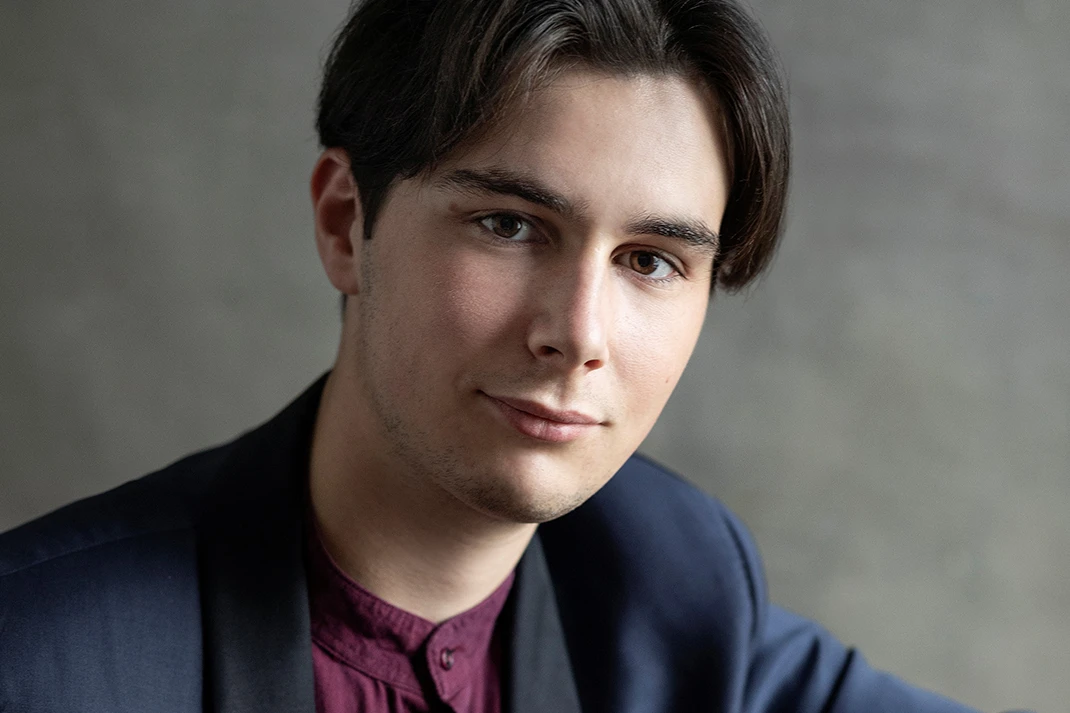
ALEKSANDER SIMIĆ cello
TOMÁŠ BRAUNER conductor
BOHUSLAV MARTINŮ PHILHARMONIC ORCHESTRA
Claude Debussy
Prélude à l'Après-midi d'un faune
Édouard Lalo
Concerto in D minor for Cello and Orchestra
Hector Berlioz
Symphonie Fantastique, H.48
The second concert in this series is an all-French programme with one of the pivotal symphonies in 19th-century music. The Bohuslav Martinů Philharmonic Orchestra is conducted by Tomáš Brauner, and the soloist is the young Austrian cellist Aleksander Simić who, nonetheless, has already performed at many prestigious venues including New York's Carnegie Hall.
The concert opens with Debussy's Prélude à l'Après-midi d'un faune, with its impressionistic musical imagery in which a drowsy faun, half-man, half-goat, plays the flute while dreaming of forest nymphs.
This is followed by Édouard Lalo's Cello Concerto in D minor, written in 1877 in collaboration with the Belgian cellist Adolphe Fischer. He premiered the composition with great success at the Cirque d'Hiver in Paris. Although Lalo dedicated the concerto to Fischer, the Spanish musical motifs in the second and third movements suggest possible inspiration by the Spanish virtuoso Pablo de Sarasate. Lalo never concealed his fascination for Spanish music, and characteristic Hispanic touches also find their way into this work combined with its tunefulness, passionate passages and rhythmic energy.
We conclude with the neo-Romantic composer Hector Berlioz's best-known work, his Symphonie fantastique in five movements. Written in 1830, it is subtitled An Episode from the Life of an Artist, and was inspired mainly by his unrequited love for the Irish actress Harriet Smithson. Enchanted and at the same time desperate, the composer depicts the turbulent emotions that consume him, with some interpretations suggesting that the work reflects the dreams of a spurned lover and hallucinations after an opium overdose. The work was a major breakthrough in musical development, not only as one of the first symphonies with programmatic content, but it also introduced the concept of the idée fixe – a central musical motif that recurs in various transformations throughout the work. Its innovative instrumentation, programmatic drama and captivating contrasts made the Symphonie fantastique a milestone in musical Romanticism and a source of great influence for the emerging generation of composers.
THE ORCHESTRA AS CHAMBER MUSICIANS
12.10. 2025 18.00 hrs, Church of the Our Lady, Help of Christians, Zlín – Jižní Svahy
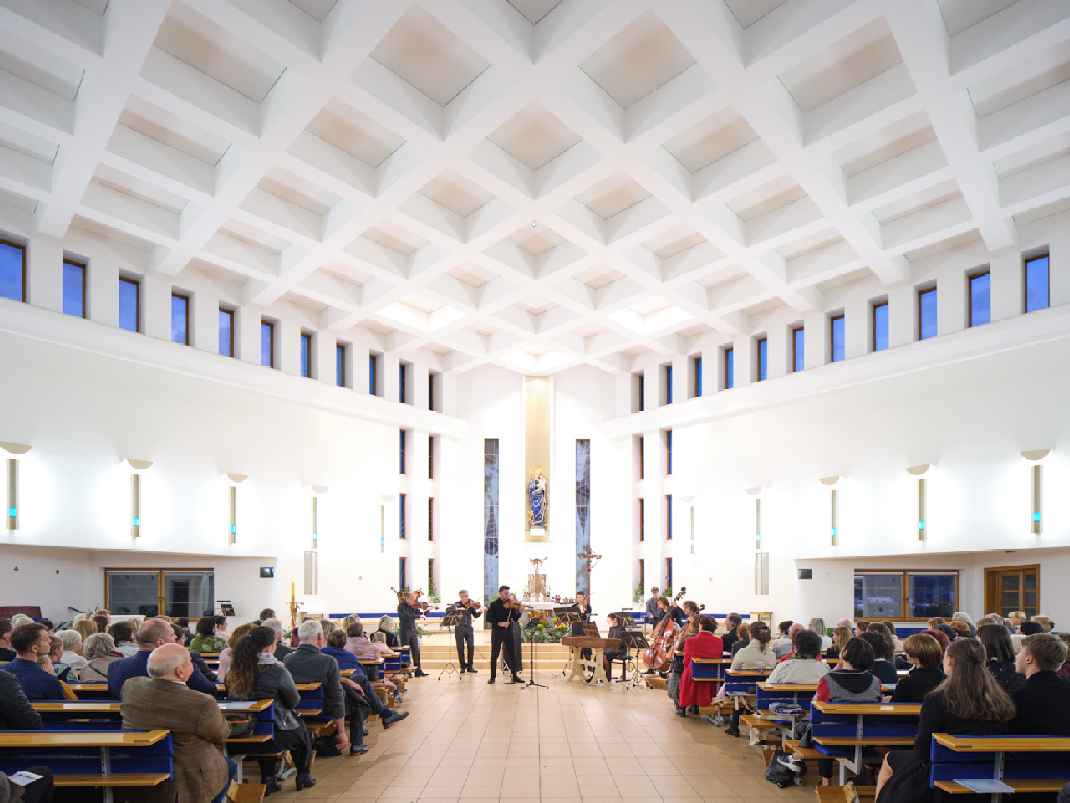
Ligneus Trio:
Alžběta Jamborová oboe Jiří Kundl clarinet Michal Kubáč bassoon
String quartet:
Alena Strojilová I. violin Michal Mrkvica II. violin Jitka Mrazíková viola Viktor Kozánek cello
Brass Harmony:
Pavel Skopal st. I. trumpet Zdeněk Macek II. trumpet Daniel Mlčák horn
Jaroslav Broža I. trombone Miroslav Žváček tuba
Jaroslav Krček Rennaissace Trio, Op. 138
Bohuslav Řehoř Music from the Maple Tree
Aleš Pavlorek Caricatures
Wolfgang Amadeus Mozart Divertimento in F major
Franz Schubert Á la hongroise
Patrick Doyle Potter Waltz
Marc-Antoine Charpentier Prelude from Te Deum
Henry Purcell Sonata
Charles Gounod Ave Maria
Tomaso Albinoni Sonata “Saint Mark”
The Bohuslav Martinů Philharmonic’s 80th season puts the spotlight on the musicians themselves as they step out of symphony orchestra mode into their chamber music projects, and this year's Harmonia Moraviae festival programme also gives them the opportunity for that.
This concert, staged at the traditional festival venue of the Church of Our Lady Help of Christians in Jižní Svahy, offers a unique insight into the Orchestra’s variety of chamber ensembles where the musicians’ individuality, teamwork and performing skills are brought to the fore. The evening features three of the Orchestra’s chamber groups: a woodwind trio, a string quartet and a brass sextet. They each bring their own respective colour and energy, and together they present a variety of musical experience demonstrating the rich expressive potential of chamber music across its range. The programme celebrates the musicians’ versatility not just in large symphony format, but also as creators of powerful musical dialogue in smaller groups.
Entry free, voluntary donations welcome
MIRO ŽBIRKA SYMPHONIC NIGHT
Wed, 15. 10. 2025, 19.00 hrs, Zlín Congress Centre

JAN PONOCNÝ guitar
JAN HORÁČEK drums
ALEŠ ZENKL bass guitar
TOMÁŠ JOCHMANN keyboards
TEREZIE KOVALOVÁ cello
ADRIAN KOKOŠ conductor
BOHUSLAV MARTINŮ PHILHARMONIC ORCHESTRA
DNIEL WUNSCH arrangements
DAVID ŽBIRKA video art
Len s ňou, Miliónkrát, Múr našich lások, Zažni, Co bolí to přebolí, Fair Play, V slepých uličkách, Katka, Slovenská, Jesenná láska, Atlantída, Balada o poľných vtákoch, Mám rád, and more.
Miroslav Žbirka’s music still resonates and finds new listeners. The ageless hits of the legendary Meky live a life of their own and at the same time fulfill the dream of many artists that their work will last and appeal to the next generations. That this is more than ever the case with this artist's songs is confirmed by our Miro Žbirka Symphonic Night concert presenting his well-loved numbers in a new light. In combination with a symphony orchestra, they stand out not only for their beauty and sensitivity but also for the timeless quality that continues to make Meky's songs alive and current.
Our symphonic evening full of musical elegance and emotion comes in the wake of the successful 2011 Symphonic Album project and subsequent Symphonic Tour. Žbirka himself helped to put this together along with the arranger Daniel Wunsch, thus laying the foundation for a unique musical presentation. Meky’s band and David Žbirka’s impressive visual art come together with our Orchestra under the baton of conductor Adrian Kokoš to bring us numbers such as the Balada o poľných vtákoch, Atlantída, Len s ňou, Múr našich lások and Co bolí, to přebolí.
Our special guest tonight is the award-winning cellist Terezie Kovalová, whose highly intuitive interpretations take these songs to a new level in a musical and visual spectacle that bring Meky Žbirka's work to life in all its power and beauty. This Symphonic Night, more than just a concert, is our tribute to a singing legend and his art, which years later can still speak to and touch the hearts of those who know how to listen and perceive the beauty of music and words.
TCHAIKOVSKY JANÁČEK MARTINŮ
Thu, 23. 10. 2025, 19.00 hrs, Zlín Congress Centre
PAVLA TESAŘOVÁ violin
ROBERT KRUŽÍK conductor
BOHUSLAV MARTINŮ PHILHARMONIC ORCHESTRA
Leoš Janáček
The Cunning Little Vixen, Prelude
Pyotr Ilyich Tchaikovsky
Violin Concerto in D major, Op. 35
Bohuslav Martinů
Who is the Most Powerful in the World? Suite from the ballet H. 133a
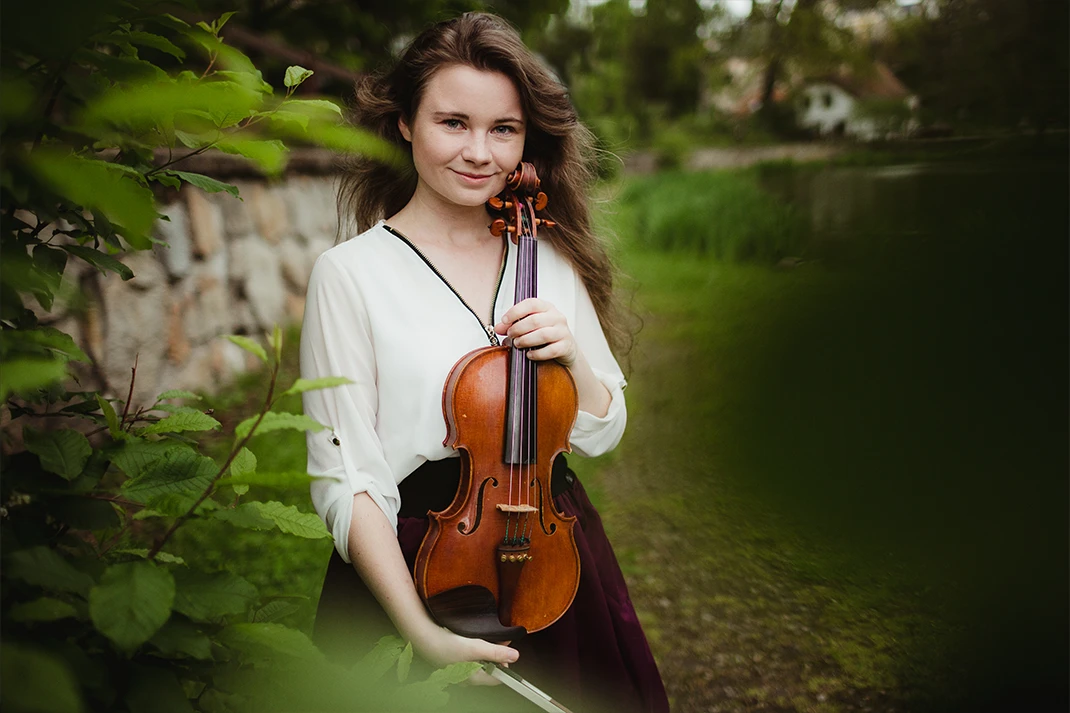
Tchaikovsky wrote his D Major violin concerto, one of the most frequently performed concertos with its thrilling virtuoso finale, in March 1878 when he was staying in the village of Clarens on Lake Geneva in Switzerland, recovering from depression. The work, with its beautiful melodies that permeate the whole of its running time of almost 40 minutes, is far from gloomy however, as it captivates the listener with its extraordinary tunefulness, fiery passion and technical brilliance. This magnificent work, which offers the soloist a unique opportunity to demonstrate their virtuosity and depth of musical expression, is played for us tonight by Pavla Tesařová, one of this country’s most talented violinists, currently concertmaster with the PKF-Prague Philharmonia Orchestra and winner of the 20th season of the Václav Hudeček Academy in Luhačovice.
Before Tchaikovsky’s sparkling violin concerto we will hear a work by Leoš Janáček, who had connections not only to Luhačovice, but also to the art of Pyotr Ilyich Tchaikovsky, whom Janáček himself once called the most modern composer of his time. The work is the prelude to his seventh opera, The Cunning Little Vixen - a work which may never have seen the light of day were it not for an unexpected turn of events. This happened one day when Janáček heard his housekeeper Marie Stejskalova laugh out loud at a piece in Lidové Noviny in which an editor, Mr Těsnohlídek, wrote verses to drawings by Stanislav Lolek showing tales of animals speaking. She showed the composer the paper and Janáček read it, letting out a laugh. “You could write a fine opera about that,” his housekeeper said, and she was right.
We then hear a suite from the ballet comedy Who is the Most Powerful in the World? by Bohuslav Martinů, who began composing it in 1922, before leaving for Paris. Martinů wrote the libretto himself, based on an English fairy tale of Indian origin. The story follows the fate of a mouse whose parents try hard to find the most powerful groom in the world for her to marry. This playful dance comedy with its whimsical music was primarily intended as an entertainment piece. Martinů himself described it as a ballet revue in which he could freely use the dances of the time, so the characters perform their moves to the rhythms of a serenade, minuet, waltz, polka, march, foxtrot, the Charleston and the Boston.
RE:CONNECT RUDY LINKA, LORENZO DE FINTI & FBM
Thu, 6. 11. 2025, 19.00 hrs, Zlín Congress Centre
RUDY LINKA guitar
LORENZO DE FINTI piano
JOEL HÁNA conductor
BOHUSLAV MARTINŮ PHILHARMONIC ORCHESTRA
News From Home, Dear Friend, Across, Folks Close to Our Farm, Czech Folk Song, and more
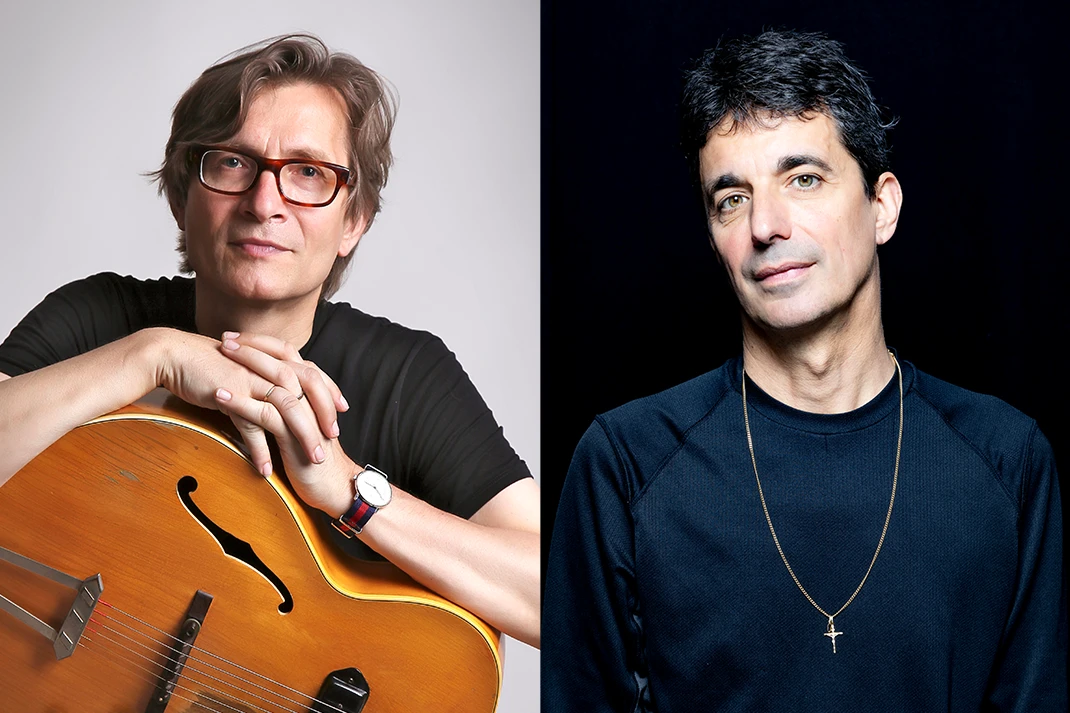
World renowned jazz guitarist Rudy Linka is back in Zlín.
The main idea of Rudy Linka’s RE:CONNECT presentation is an attempt to unite today's divided society through music, and this concert features pieces with a strong connection to this country and its specific historical events, exemplified by News From Home, in which he salutes the Velvet Revolution, also Dear Friend, dedicated to the Czech jazz legend Karel Velebny, and Across, inspired by Czech folk music.
All the arrangements are by Gil Goldstein, who has worked with such stars as Bobby McFerrin, Pat Metheny, Gil Evans and Miles Davis winning five Grammy awards for his arrangements.
This is an occasion to leave your bow tie and formal gown at home for this world-class jazz experience in a unique evening of great music that unites cultures and generations.
Tickets for the concerts can be purchased online or at the FBM box office in the Zlín Congress Centre.